
Research lines
My research can be categorized in the following three research lines:
- Sustainability Engineering and Economics: Chemical engineering principles combined with economic evaluation to produce solutions that are both effective and affordable. The line covers the rational use of material and energy resources, and the design and optimisation of materials, production processes and equipment in the chemical and related industries — under conditions of sustainability, safety, environmental protection and economic viability.The research line Sustainability Engineering and Economics focuses on the integrated evaluation of emerging technologies by combining engineering analysis with economic and sustainability perspectives. Particular attention is given to green, clean, environmental, energy, and climate-resilient technologies, with the aim of assessing their technical performance, economic feasibility, and broader sustainability potential.
- Circular Economy and BioEconomy: Circular and bio-based chemical production, analysed for its economic dimension: the costs, the benefits and the uncertainties that come with resource recovery, recycling, reuse and bioeconomic processes in the chemical industry. The research line Circular Economy examines the economic dimensions of circularity and the transition towards circular production and resource-use models. Emphasis is placed on the valuation of circular strategies and on understanding how uncertainty, learning processes, and technological development influence their economic performance.
- Accident prevention and economic evaluation: Scientific approaches are applied to laboratory chemical processes and to the chemical industry, with the aim of optimising the socioeconomic parameters of prevention. This research line examines safety and accident prevention as economic decision problems in chemical laboratories and the chemical industry. Economic evaluation, cost-benefit analysis, risk and uncertainty analysis, and probabilistic methods are applied to assess prevention investments, quantify the economic consequences of accidents and avoided losses, and support the efficient allocation of resources to safety
Research areas
My research is focused on three main application areas: (i) sustainable production through clean and green chemical technologies, including the synthesis and economic assessment of advanced materials and nanomaterials; (ii) wastewater treatment, with particular emphasis on adsorption, regeneration, reuse and resource recovery; and (iii) safety in university chemistry laboratories, including the economic evaluation of risk prevention, safety measures and laboratory processes.
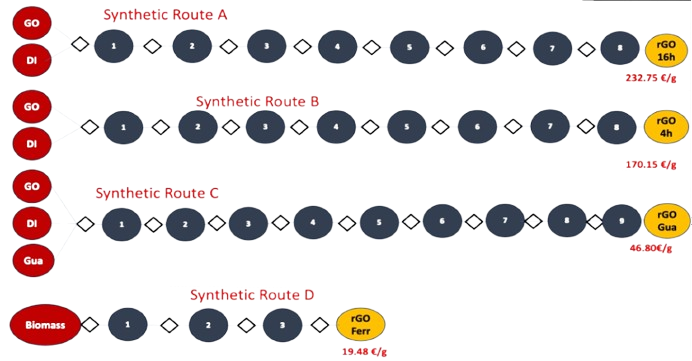
Synthetic routes with the same target material
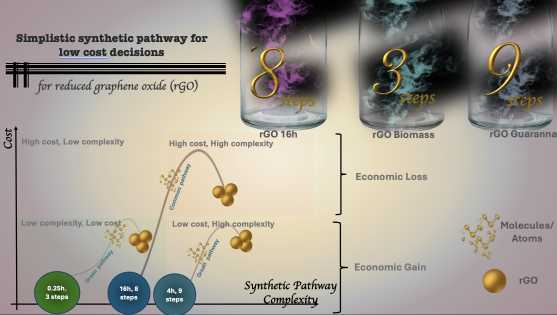
Various reduced graphene oxide green synthetic routes: comparing the cost procedures
D.A. Gkika, K.N. Maroulas, G.Z. Kyzas — ACS Omega, 2025 · doi 10.1021/acsomega.5c04090
Graphene derivatives are used in gas sensing, biomedicine, stretchable electronics, energy storage, photodetectors and pollutant degradation, but their synthesis usually depends on expensive, hazardous chemicals, and published cost data is scarce. This study tested whether activity-based cost data can guide low-cost synthesis decisions for reduced graphene oxide. Guarana was introduced as a greener reducing agent and the process was cut from eight steps to three. Applying green chemistry principles and activity-based costing at the same time improved both yield and sustainability: the conventional eight-step route costs 248.64 €/g, the streamlined three-step route 19.48 €/g, mostly through lower chemical and energy use.
Application in nano-adsorbent materials
Cost evidence yields the viability of metal oxides synthesis routes
D.A. Gkika, G.Z. Kyzas — ACS Sustainable Chemistry and Engineering 13 (2025) 17370-17379 doi 10.1021/acssuschemeng.5c06752
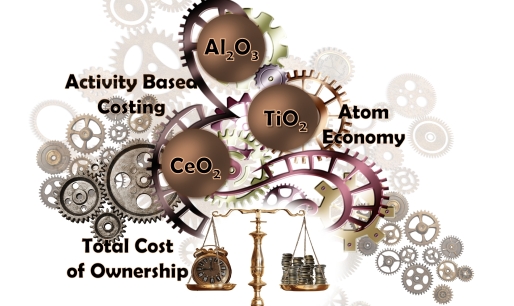
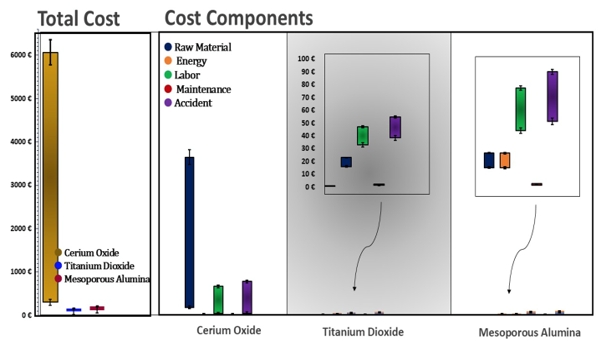
AMetal-based nanomaterials continue to be extensively studied, as they are regarded as the foundation of significant technological advancements due to their promising properties. However, despite these advantages, their broad adoption remains constrained by the high costs associated with the synthetic methods commonly reported in the literature. The novelty of this study lies in its integrated approach, which combines activity-based costing, total cost of ownership, and green metrics (including percentage yield, stoichiometric factor, atom economy, and reaction mass efficiency). Using three illustrative case studies (TiO2, Al2O3, CeO2) it was shown that if the synthesis processes were considered cost alone, the TiO₂ resulted in the lowest total synthesis cost. Green metrics evaluation further reinforce the sustainability of TiO₂. A comparative assessment of green metrics for TiO2 and Al2O3 revealed that while TiO₂ and Al₂O₃ exhibit comparable atom economies (TiO₂: 19.37%; Al₂O₃: 19.40%), TiO₂ achieves a higher percentage yield (97% vs. 95%) and significantly outperforms Al₂O₃ in terms of stoichiometric factor (8.51 vs. 25.77), indicating more efficient use of reactants and reduced chemical waste. Additionally, TiO2 shows a marginally higher Kernel’s Reaction Mass Efficiency (18.79% vs. 18.43%). The findings indicate that low cost and efficiency are closely interconnected concerns in synthetic routes.
Application in 3d adsorbent materials
3D printed hierarchical porous amino-functionalized graphene oxide/activated carbon adsorbent composites for pharmaceuticals removal
P. Efthymiopoulos, I. Siadimas, D.A. Gkika, S. Kavafaki, R.I. Kosheleva, G. Maliaris, G.Z. Kyzas — Chemical Engineering Journal 529 (2026) Article number 172890doi 10.1016/j.cej.2026.172890
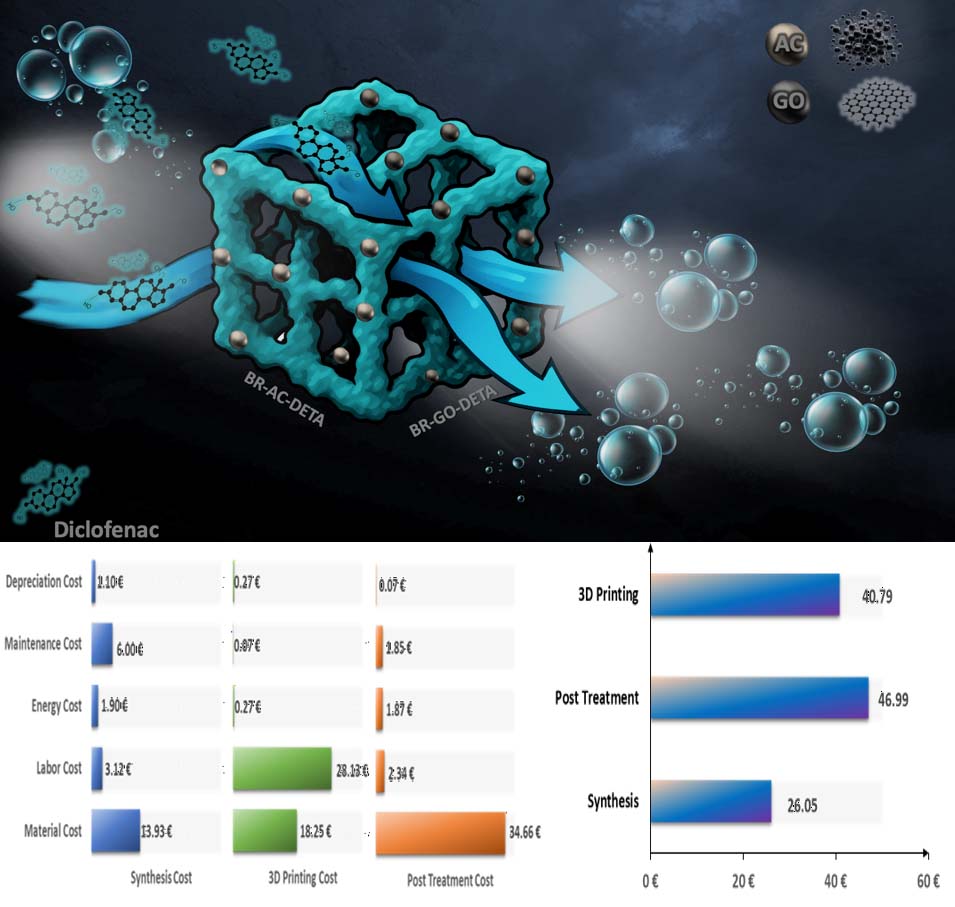
Diclofenac in wastewater poses a significant threat to both human health and ecological systems. In this work, two three-dimensional (3D) hierarchical porous polymer/carbon material, namely activated carbon (AC) and graphene oxide (GO) composites were fabricated using a vat polymerization-based 3D printing method. Firstly, in order to produce high-performance amino-functionalized graphene/activated carbon polymer composites, their functionalization by diethylenetriamine (DETA) was performed. A porogen solvent was employed in order to induce porosity in the polymer matrix (base resin, BR) via phase separation during the photopolymerization process and led to the creation of two types of composites: BR-AC-DETA and BR-GO-DETAEvaluated the economic feasibility of the 3D printed BR-GO-DETA composite. Based upon experimental models, we determined the cost price the composite and compared the three main phases of the synthesis process. The cost price of 3D printed BR-GO-DETA composite is estimated as 2.28 €/adsorbent. Moreover, the raw materials contribute the overwhelming majority of this cost and the intensified process of posttreatment is the most expensive among the other processes.
Application in green materials
Green Hydrogels Based on Spirulina Pl. Polysaccharides and Carboxymethyl Cellulose for Atenolol Pharmaceutical Compound Removal from Wastewaters
P. Efthymiopoulos, E. Tsintziras, D. A. Gkika, K. Pal, I. K. Kalavrouziotis, and G. Z. Kyzas — ChemistrySelect 11, no. 16 (2026): e07429 doi 10.1002/slct.202507429
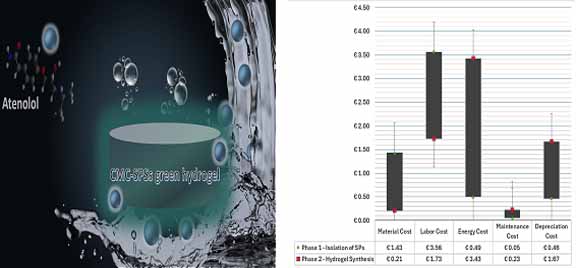
An innovative green hydrogel is introduced, specifically designed for the removal of atenolol from aqueous systems. The hydrogel is synthesized through an eco-friendly, rapid, and scalable method that employs carboxymethyl cellulose (CMC) and Spirulina platensis soluble polysaccharides (SPSs) cross-linked with citric acid. The originality of this study lies in its comprehensive methodological framework, which integrates green chemistry principles with experimental cost analysis to promote sustainable large-scale applications. To improve the cost efficiency, the synthesis pathway was fully optimized, and activity-based cost data were incorporated to develop cost-effective production strategies for CMC/SPSs hydrogels. The process adheres to circular economy principles by utilizing renewable feedstocks, reducing environmental burdens, and promoting efficient pollutant remediation. A detailed cost analysis revealed an estimated production cost of approximately €2.13 per gram, with labor expenses constituting the dominant cost factor, especially during synthesis. Collectively, these findings highlight the feasibility of combining renewable materials and green chemistry approaches to achieve sustainable water purification, offering a promising and scalable approach for removing atenolol from wastewaters.
Wastewater treatment
Adsorption and environmental separation
Application of Molecularly Imprinted Polymers (MIPs) as environmental separation tools
D.A. Gkika, A.K. Tolkou, D.A. Lambropoulou, D.N. Bikiaris, P. Kokkinos, I.K. Kalavrouziotis, G.Z. Kyzas — RSC Applied Polymers in press, (2024) doi 10.1039/D3LP00082F
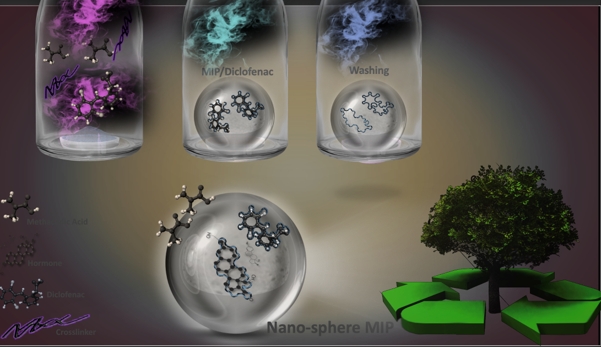
Suitable sorbents are required for the effective enhancement of sample extraction. Molecular imprinted polymers (MIPs) and related techniques can be utilized to create sorbents that possess specialized binding capabilities for target analytes, exhibiting high selectivity, and other unique attributes such as thermochemical stability, reusability, and sensitivity, thus aligning with the principles of green chemistry. These attributes can be customized; hence sample preparation can be carried out using a variety of methods and can be applied to a broad spectrum of samples, including environmental, biological, and food samples. Numerous techniques have emerged for the production of MIPs, that have their individual advantages and disadvantages. This review places particular emphasis on the interactions between primary functional groups and monomers and how these functional groups impact MIP performance. Additionally, we offer insights into how functional groups can significantly enhance the imprinting effect, resulting in a markedly increased imprinting factor and specific rebinding capacity. This work initially discusses the headway made in synthesis approaches and the applications of MIPs over the past five years. Then, provide a comprehensive overview of the common challenges encountered and the environmental applications of MIPs. The significance of the availability of various polymerization mechanisms and use of diverse functional molecules and cross-linkers is emphasized.
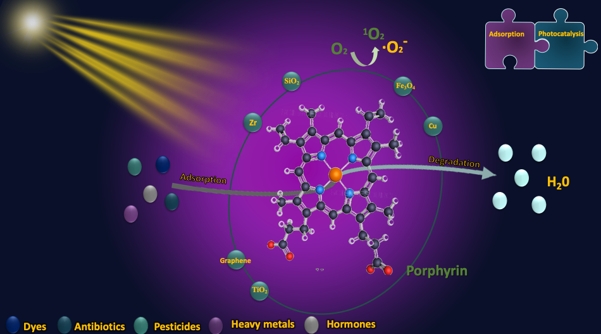
Adsorption and photocatalytic applications of porphyrin-based materials for environmental separation processes: A review
D.A. Gkika, K. Ladomenou, M. Bououdina, A.C. Mitropoulos, G.Z. Kyzas — Science of the Total Environment 908 (2024) Article number 168293 doi 10.1016/j.scitotenv.2023.168293
Numerous studies have been conducted on wastewater treatment, primarily focusing on two key approaches: adsorption and photocatalytic degradation. Adsorption offers unparalleled advantages, including its simplicity, high removal efficiency, and cost-effectiveness. Conversely, photocatalysis harnesses abundant, clean, and non-polluting sunlight, addressing the critical issue of energy scarcity. Porphyrins, which are macrocyclic tetrapyrrole derivatives found widely in nature, have attracted growing interest in recent years. These lipophilic pigments exhibit remarkable chemical stability and have retained their major structural features for up to 1.1 billion years. As such, they are considered vital indicators of life and have been extensively studied, from the remnants of extinct organisms to gain insights into the principles of evolution. Porphyrins are often associated with a central metal ion within their ring system and can be modified through various substituents, including additional rings or ring opening, resulting in a wide range of functionalities. This comprehensive review summarizes recent advancements in the field of porphyrins. It begins by introducing the structures and preparation methods of porphyrins. Subsequently, it delves into notable applications of porphyrins in the context of pollutant adsorption in water and their environmentally friendly photocatalytic degradation.
Application of low-cost adsorbent materials
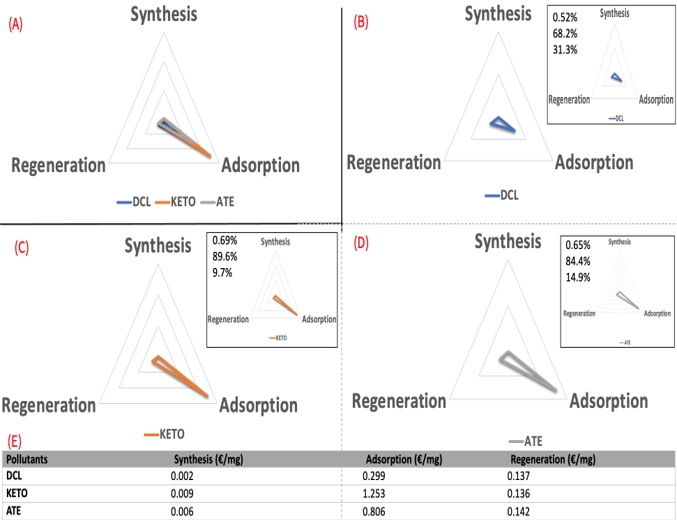
Sustainable Multifunctional Life-Cycle Cost (LCC) Framework for Activated Carbon Materials: Linking Synthesis Procedure to Adsorption Performance
D. A. Gkika, S. L. Kouvalakidou, and G. Z. Kyzas — ACS Sustain. Resour. Manag., Mar. 2026 doi 10.1021/acssusresmgt.5c00696
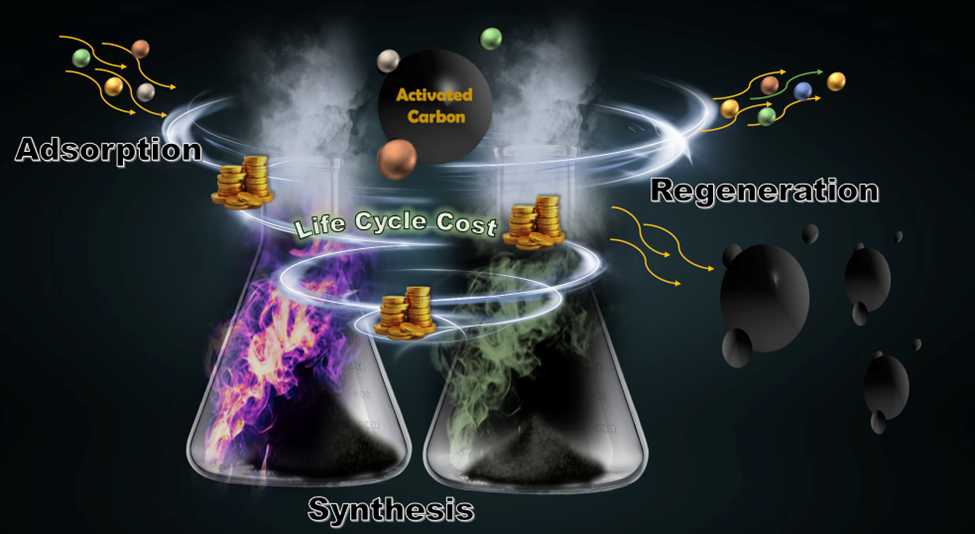
Advancing technology drives the need for multifunctional materials, while global priorities demand that such performance be achieved through green chemistry to ensure truly sustainable development. Activated carbon (AC) in particular may satisfy these requirements thus scholars are investing considerable effort to translate AC cost-effective lab production. However, adsorption and synthesis protocols involve repetitive steps that add substantial costs to material development. This study introduces a multifunctional Activity based- Life cycle costing (ABC-LCC) methodology for waste-derived activated carbon, applied across three pollutants, diclofenac (DCL), ketoprofen (KETO), and atenolol (ATE). The method provides a multi-pollutant economic assessment at laboratory scale. Material costs, approximately 61.6%, are the largest contributor to synthesis LCC. Adsorption dominates the LCC for KETO, around 90%, while among the pollutants studied, only DCL shows a high regeneration percentage, approximately 31%. DCL is the most economical pollutant to remove, with a life-cycle cost of 0.43 €/mg, whereas KETO is the most expensive at 1.39 €/mg. The results show that environmental and economic performance share a common denominator: Qmax, the same adsorption capacity that determines pollutant removal efficiency also governs the life-cycle cost of treatment. Qmax therefore acts as the unifying factor that drives both sustainability and cost-effectiveness.
Application of coagulant materials
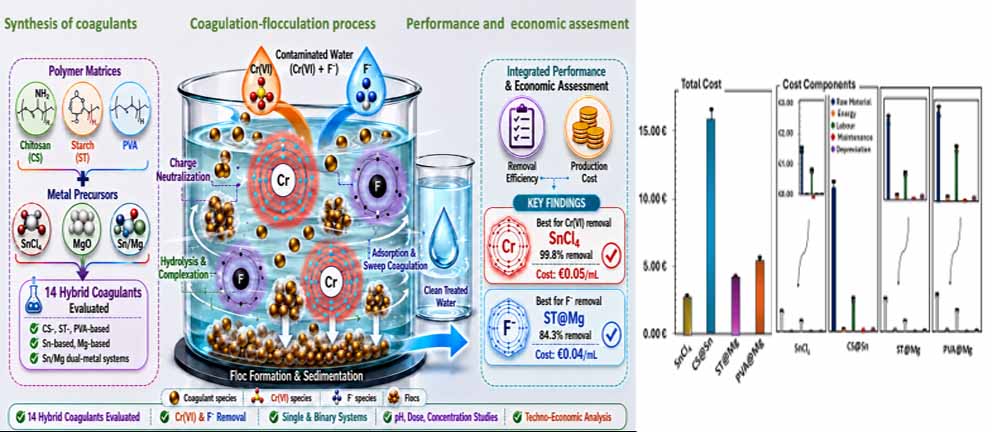
Comparative performance and techno-economic evaluation of pristine and hybrid Sn- and Mg- based coagulants for the removal of Cr(VI) and fluoride ions
Sanjay Kay Sagar, Despina A. Gkika, Sabrina Sorlini, Athanasia K. Tolkou — Separation and Purification Technology, Volume 409, 2026, 139319, ISSN 1383-5866 doi 10.1016/j.seppur.2026.139319
The persistent co-occurrence of fluoride (F⁻) and hexavalent chromium (Cr(VI)) in water systems raises significant concerns and highlights the need for effective treatment. Coagulation technology prompts significant research efforts towards the use of new economically viable coagulants. This study evaluates a series of novel coagulants, examined, such as inorganic SnCl₄ and MgO, as well as hybrid polymer-metal systems (Sn, Mg or Sn/Mg) based on chitosan (CS), starch (ST) and poly(vinyl alcohol) (PVA), for the comparative removal of F⁻ and Cr(VI) under single and co-contamination conditions. In addition, the work incorporates an economic assessment, delivering a comprehensive cost–performance analysis that integrates treatment effectiveness with material and operational expenses. For Cr(VI) removal, SnCl₄ achieves the highest efficiency (99.8%) under acidic conditions (pH 5) with a low production cost (€0.05/mL), making it the most favorable option from a cost–performance standpoint. CS@Sn also performs effectively under the same conditions but is less economically competitive (€0.14/mL). In contrast, F⁻ removal is optimized pH 3 (84.3%), where ST@Mg combines outstanding removal efficiency with the lowest production cost (€0.04/mL), highlighting its suitability as a cost-effective coaggulant. The integrated framework enables mechanistic differentiation and identifies the most effective and economically viable coagulant.
Regeneration and reuse of spent adsorbent
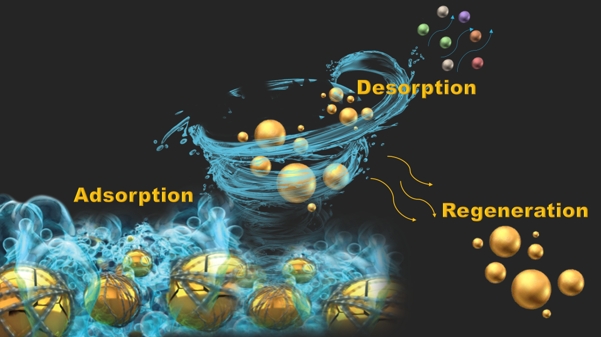
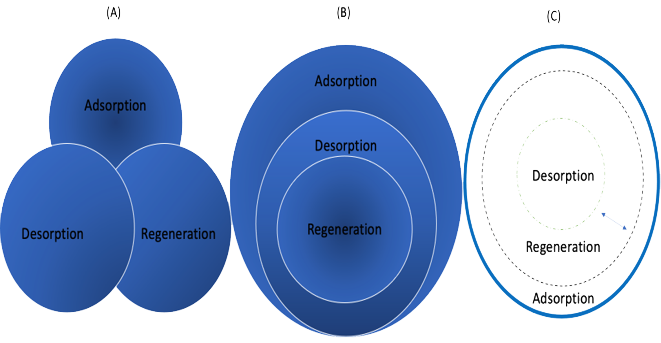
The adsorption-desorption-regeneration pathway to a circular economy: The role of waste-derived adsorbents in chromium removal
D.A. Gkika, A.K. Tolkou, I.A. Katsoyiannis, G.Z. Kyzas — Separation and Purification Technology 368 (2025) Article number 132996 doi 10.1016/j.seppur.2025.132996
Considering the vital role of water, the need to enhance and maintain its quality is increasingly crucial. Chromium predominantly exists in hexavalent and trivalent forms (Cr(VI) and Cr(III)). The primary environmental concern stems from their synthetic and persistent nature, which contributes to toxicity and adverse effects on the proper functioning of vital organs. Among the various removal techniques explored in the literature, adsorption is considered superior due to its minimal use of chemicals. In recent years, researchers have increasingly turned to waste materials due to their potential to convert biomass-based waste into valuable products. This review compiles an extensive list of low-cost adsorbents derived from various waste materials. The results indicated that among the low-cost agro-industrial residues tested for hexavalent chromium removal, Olive leaves Chemlali pruning waste showed the highest adsorption efficiency (99.98%), followed by Maize (Zea mays L) and Neolamarckia cadamba wood, with uptake capacities of 277.57 mg/g and 86.95 mg/g, respectively, at pH 5 and 4. Desorption efficiencies were high. It was found that the highest desorption efficiencies obtained by NaOH. NaOH has achieved good desorption efficiencies of 96.22 % and >99.74 % for some materials. Additionally, the costs of various waste-derived adsorbents were compared, with activated carbon produced from spent coffee grounds emerging as a particularly cost-effective option 14.12$/kg relative to other alternatives . A key research gap emerges from the high cost of waste-based adsorbents. From a circular economy perspective, a crucial finding is that significant economic value can be derived from repurposing waste adsorbents.
Resource recovery and circular treatment pathway
Reusability of Spent Adsorbents for a Circular Materials Economy in a Chemical and Sustainable Industry
D. A. Gkika and George Z. Kyzas — RSC Sustainability, 2026 doi 10.1039/D5SU00802F
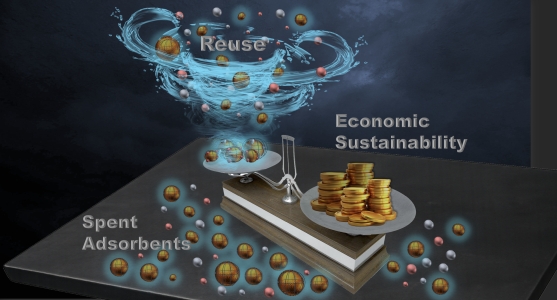
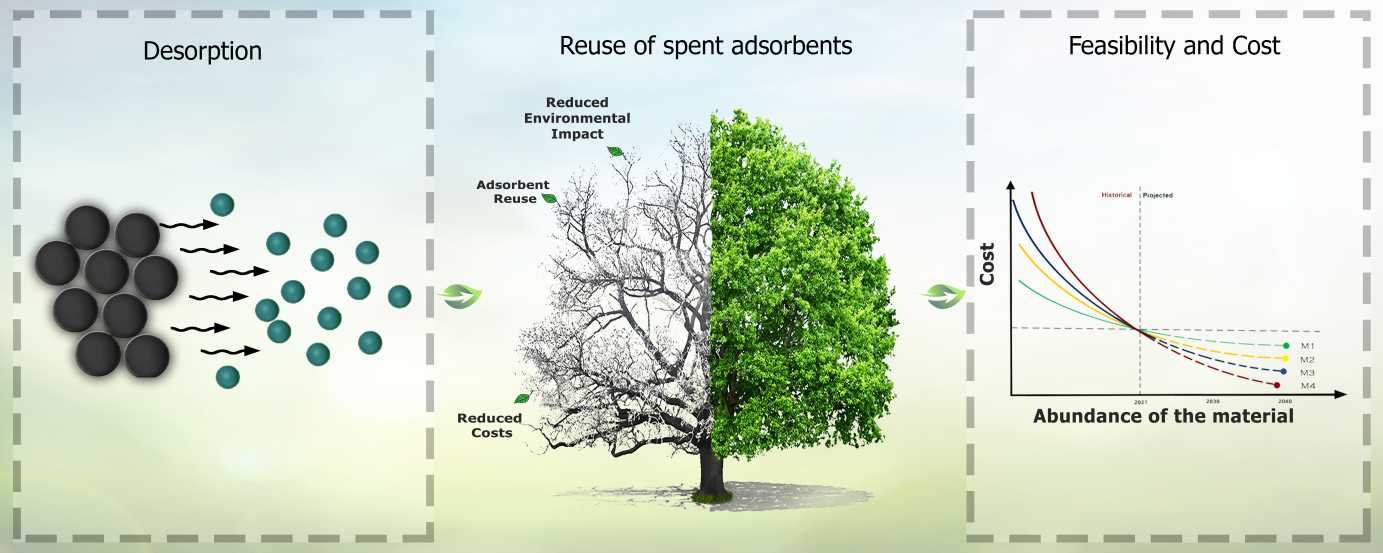
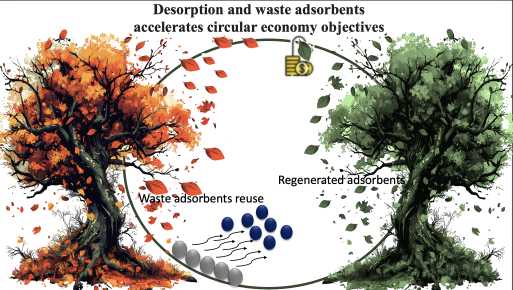
Circular adsorption systems, particularly the management of spent adsorbents, are reaching a pivotal stage in industrial adoption and large-scale implementation. Simultaneously, the production and scaling of spent adsorbents are increasingly aligning with commodity applications. However, the prevailing approach to spent adsorbents at the end of their lifecycle primarily focuses on disposal or recycling to mitigate secondary pollution. A more economically favourable alternative involves prioritizing efficient reprocessing and recycling over disposal. In this context, the review underscores the decisive role of cost management in both the synthesis and regeneration of adsorbents. The synthesis stage has a strategic and multifaceted impact on adsorption performance, with several parameters, either individually or jointly, exerting a direct influence on cost. Key economic determinants include preparation and modification expenses, process complexity, and overall yield, all of which are essential in assessing the feasibility of adsorbent technologies. The review also combines scientific and strategic perspectives by grouping adsorbents according to their synthesis and regeneration cost profiles. Materials such as graphene oxide, silica, carbon nanotubes, and MOF-based composites fall into the high-cost category due to their costly production and regeneration requirements. In contrast, agricultural waste-based adsorbents emerge as a cost-effective solution, offering low synthesis and regeneration costs. Although composites hold strong potential, their high cost remains a major obstacle to large-scale implementation. On the top of that, we present strong economic incentives for adopting spent adsorbent reclamation over alternative pathways. The sustainable management of spent adsorbents—including recovery and regeneration processes—is reviewed through the lens of circular economy.
Safety in university chemistry laboratories
Risk–return profile of nanomaterials
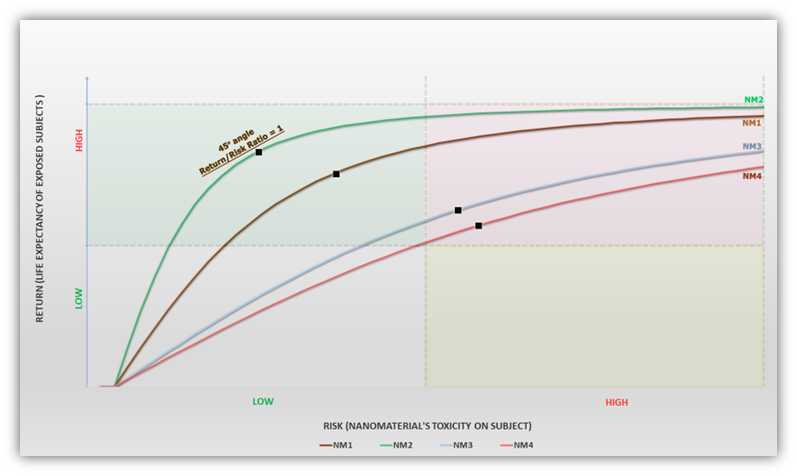
D.A. Gkika, N. Vordos, L. Magafas, A.C. Mitropoulos, G.Z. Kyzas — Journal of Molecular Structure, 2021 · doi 10.1016/j.molstruc.2020.129740
Since nanomaterials entered general use, their risks and their possible returns have been argued over without a rigorous frame. This paper analyses that relationship directly, giving particular attention to the Probit model and testing its predictive risk–return efficient frontiers for nanomaterial risk. The approach shows real promise for connecting the risks of nanomaterial use to potential returns in life expectancy, and for identifying the optimum material within a group. The underlying premise is that focusing on low-risk nanomaterials serves scientific and social objectives at once.
Economic evaluation during physicochemical characterisation: a cost-benefit analysis
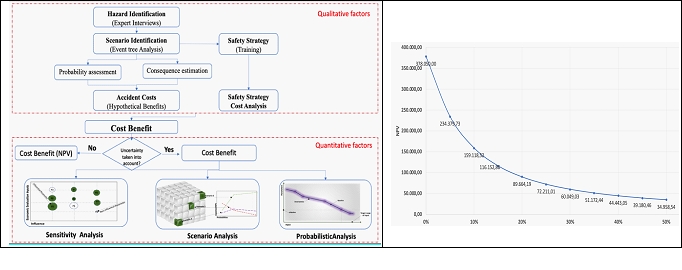
D.A. Gkika, N. Vordos, A.C. Mitropoulos, G.Z. Kyzas — ChemEngineering, 2025 · doi 10.3390/chemengineering9050095
As universities expand, so does the number of laboratories handling hazardous chemicals — and the characterisation equipment inside them carries real risk for researchers. This paper offers a simplified way to evaluate prevention investment for nanomaterial work at lab scale, modelling the benefits as avoided accident costs and the cost as safety training, against the alternative of not investing at all. Net present value was calculated and the benefits exceeded the cost. Sensitivity analysis showed insurance benefits weigh heavily on the outcome, and the probabilistic results put NPV between 283.053 and 337.356, making the safety investment profitable with 90% probability. It is the first study to evaluate safety investment through an economic evaluation of a laboratory accident involving small-angle X-ray scattering.
Research interests
Production and environment
Processes and production under uncertainty and risk
doi 10.1016/j.scitotenv.2022.153612
Sustainable development
Economic viability and life-cycle costs of chemical technologies
doi 10.1016/j.wasman.2025.114952
Circular economy
Value recovered from reuse, recycling and regeneration
doi 10.1021/acssusresmgt.5c00696
Economics of treatment
Economic efficiency of treatment technologies and processes
Research methods
My research draws on three main groups of methods: (i) economic and techno-economic assessment, (ii) decision, risk and uncertainty analysis, and (iii) sustainability and circular-economy assessment. These methods are applied individually or in combination to investigate the economic dimensions of chemical processes, materials and technologies.
Economic and techno-economic assessment is used to determine how technical choices are translated into costs, economic performance and value. Activity-based costing is applied to identify the cost contribution of individual materials, operations and process stages, while techno-economic assessment is used to examine the economic feasibility and performance of chemical technologies. Life-cycle costing extends the analysis across the lifetime of a material or process, and cost-benefit and cost-effectiveness approaches are used to compare alternative technological, environmental and safety choices.
Decision, risk and uncertainty analysis is used when the economic outcome of a chemical choice depends on uncertain technical, operational or safety conditions. Net present value, sensitivity analysis, scenario analysis and probabilistic approaches are applied to examine the robustness of economic decisions and to identify the parameters that most strongly influence outcomes. Risk–return approaches are also used to support the selection of materials, technologies and safety investments when competing benefits and risks need to be considered.
Sustainability and circular-economy assessment integrates economic information with technical and environmental performance. Life-cycle approaches, sustainability indicators, atom economy and related green-chemistry metrics are used to examine the relationship between resource use, reaction or process efficiency, environmental performance and cost. Circular-economy assessment is used to evaluate the economic implications of regeneration, reuse, recycling and resource recovery, with particular attention to the value retained or recovered through circular pathways.
Across these methodological approaches, economic analysis is integrated with chemical and engineering information rather than being considered separately. This allows the economic consequences of choices concerning materials, synthesis routes, process conditions, safety, treatment, performance and circularity to be evaluated within the same decision framework.
Strategic performance and financial control
supports strategic decision-making in chemical processes by modelling how stakeholders interact, so economic and sustainability outcomes can be optimised together.
allocates costs to individual processes and activities, including the environmental costs of green chemistry, which makes eco-efficient and economically sustainable management possible.
Decision and uncertainty analysis
assesses the financial viability of chemical investments.
shows how changes in inputs move economic and sustainability outcomes.
explores alternative process or market futures to support resilient decisions.
quantifies uncertainty in raw materials, production efficiency and safety events to inform process planning.
Sustainability performance indicators
cost-benefit analysis, weighing processes and technologies across economic, environmental and operational impacts.
techno-economic assessment of the profitability and efficiency of chemical technologies, including long-term sustainability.
life-cycle costing for total cost across a process or product lifetime, and life-cycle analysis for the environmental impacts and their economic consequences.
circular economy assessment of the value in resource recovery, recycling and bio-based pathways, and atom economy linking reaction efficiency and waste reduction to economic sustainability.
Hover or select any method on the tree to read what it covers.